Otto Krause · 26 October 2026
North Sea Tempests Drive Changes in Ferry Routing and Crew Training Protocols
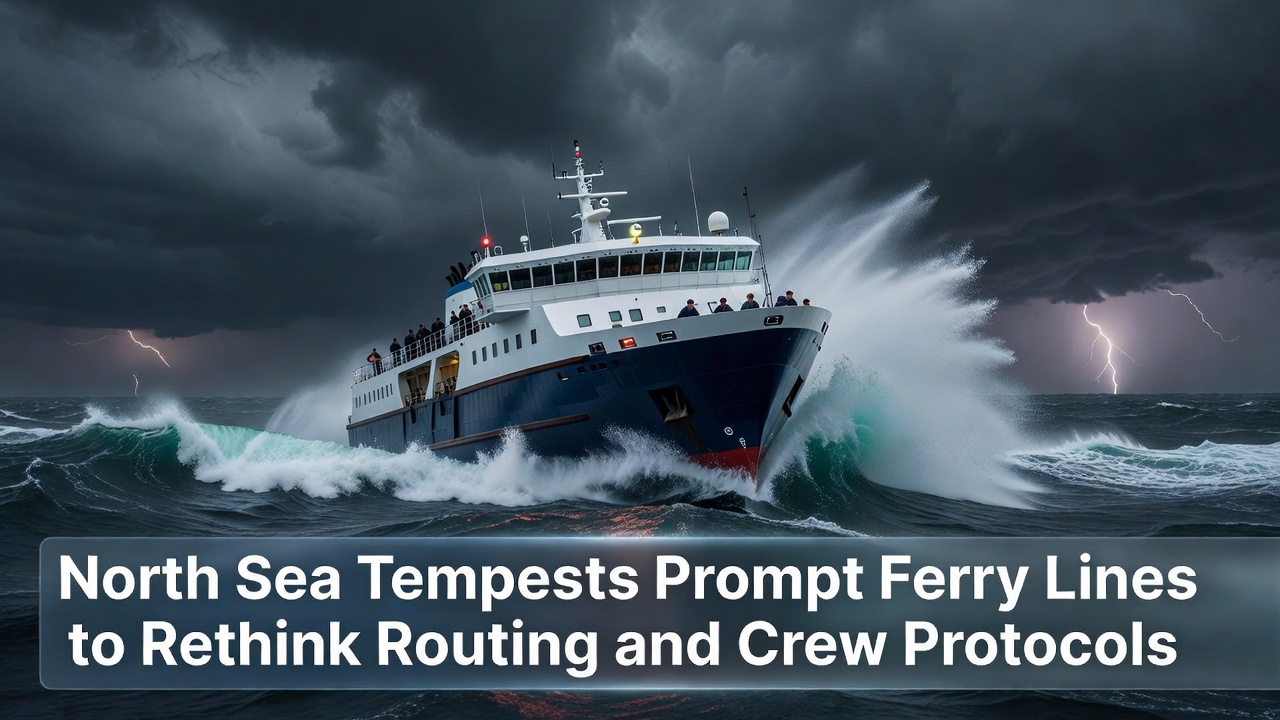
Storms across the North Sea have intensified in recent years, and operators now face mounting pressure to revise established routes while updating crew procedures to maintain safety standards. Data from October 2026 shows multiple crossings delayed or rerouted as gale-force winds and high waves struck key corridors between the UK, Norway, and the Netherlands. Those patterns prompted companies to review both navigation plans and onboard protocols in a coordinated push for resilience.
Current Storm Patterns and Their Effects
Weather records compiled through 2026 indicate that North Sea low-pressure systems formed more frequently during the autumn months, bringing sustained winds above 50 knots and wave heights exceeding 8 meters on several occasions. Ferry services linking Harwich to Hook of Holland and Newcastle to Bergen experienced the sharpest disruptions, with schedules adjusted on at least twelve separate days in October alone. Observers note that these events clustered around mid-month, creating a narrow window when multiple vessels had to seek shelter or alter course simultaneously.
Traffic management centers reported that average transit times increased by up to four hours on affected routes, while fuel consumption rose because vessels took longer detours to avoid the worst conditions. Shipping data released by the European Maritime Safety Agency confirms that incident reports involving minor structural stress on ro-ro ferries climbed during the same period, although no major accidents occurred.
Routing Adjustments Underway
Ferry lines responded by expanding the use of dynamic weather-routing software that integrates real-time forecasts from the Norwegian Meteorological Institute and satellite observations. Planners now incorporate buffer zones around developing lows, shifting departures several hours earlier or later to thread between storm tracks. One operator introduced a trial corridor that skirts farther north of traditional lanes when forecasts predict rapid intensification, a move that added roughly 30 nautical miles but reduced exposure to beam seas.
Port authorities in Rotterdam and Esbjerg coordinated with vessel traffic services to prioritize berthing windows for vessels arriving ahead of forecast deterioration. These measures rely on shared data feeds that allow terminals to adjust pilot availability and tug allocations without last-minute scrambling.
Updated Crew Protocols and Training
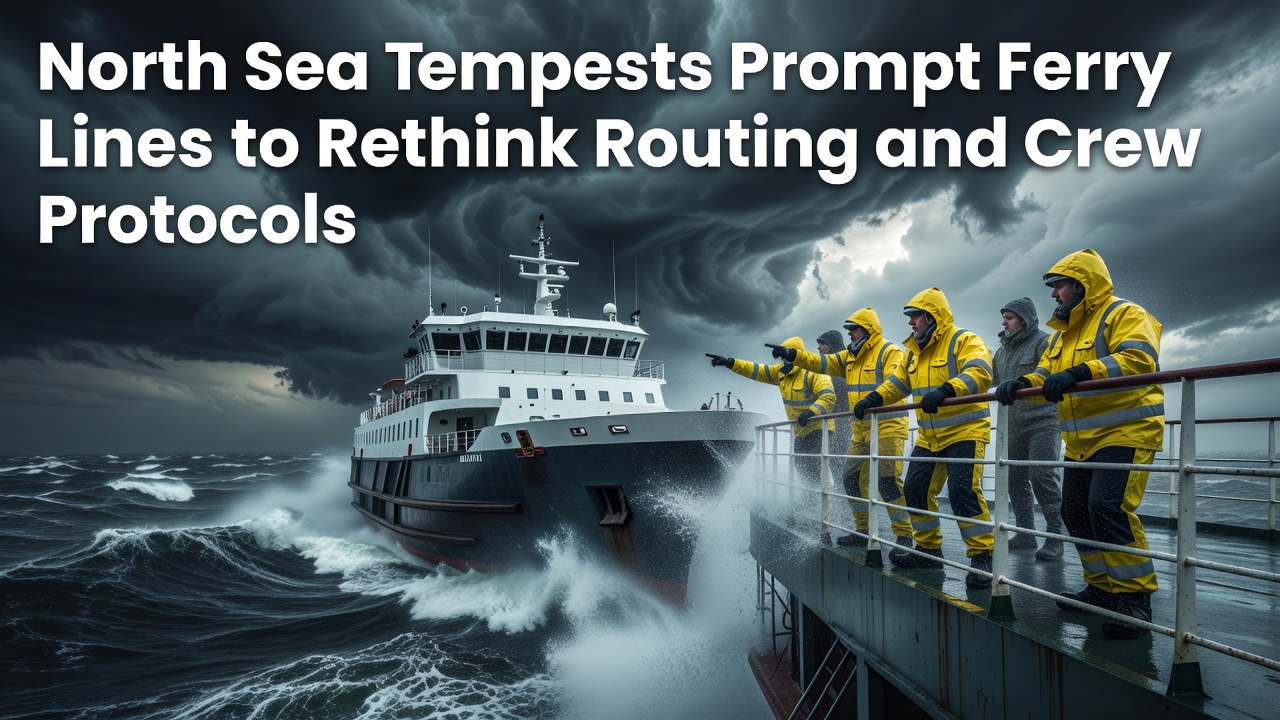
Crew training programs have expanded to cover scenario-based drills that simulate sudden course changes in heavy weather. Companies now require bridge teams to complete simulator sessions focused on maintaining stability when wave periods shorten and wind shifts occur within minutes. Additional emphasis has been placed on fatigue management, with revised watch schedules that insert extra rest periods before departures expected to encounter marginal conditions.
Medical and safety officers received updated guidance on treating motion-related injuries and on securing cargo more aggressively when forecasts indicate prolonged rolling. Several lines introduced mandatory pre-voyage briefings that review the latest ensemble forecasts and agree on trigger points for diverting to alternative ports such as Kristiansand or IJmuiden.
Industry Collaboration and Data Sharing
Trade associations representing North Sea ferry operators established a joint working group in late 2025 that continued meeting through October 2026. Participants exchange anonymized voyage data and near-miss reports, allowing members to identify common risk factors more quickly. This collaboration extends to equipment suppliers who are testing reinforced hatch covers and improved radar calibration for use in spray-heavy conditions.
Academic researchers at the University of Southampton contributed modeling studies that project how storm frequency may evolve through 2030, giving planners quantitative scenarios to test against current fleet capabilities. Those findings feed directly into route-planning algorithms rather than remaining theoretical exercises.
Conclusion
North Sea ferry operations continue to adapt as operators integrate fresh routing tools and refined crew procedures in response to evolving storm activity. The measures implemented by October 2026 reflect a systematic approach that combines meteorological data, operational adjustments, and targeted training to keep services running safely across one of Europe's busiest maritime regions.